Luxury Wooden Packaging Trends for 2027: Fragrance, Video Boxes & Material Engineering
Introduction
In planning for 2027, luxury wooden packaging buyers are asking how a box can protect a product, express its character and support a memorable presentation. This article draws on the manufacturing experience and customer inquiries of Tongtai, the manufacturer behind WOODPKG. It describes design choices we have encountered, not a forecast of global market growth. The right solution depends on the product, quantity, finish, intended market and approval requirements.
1. Fragrance Packaging: What Our Inquiries Actually Show
From sample requests to design decisions
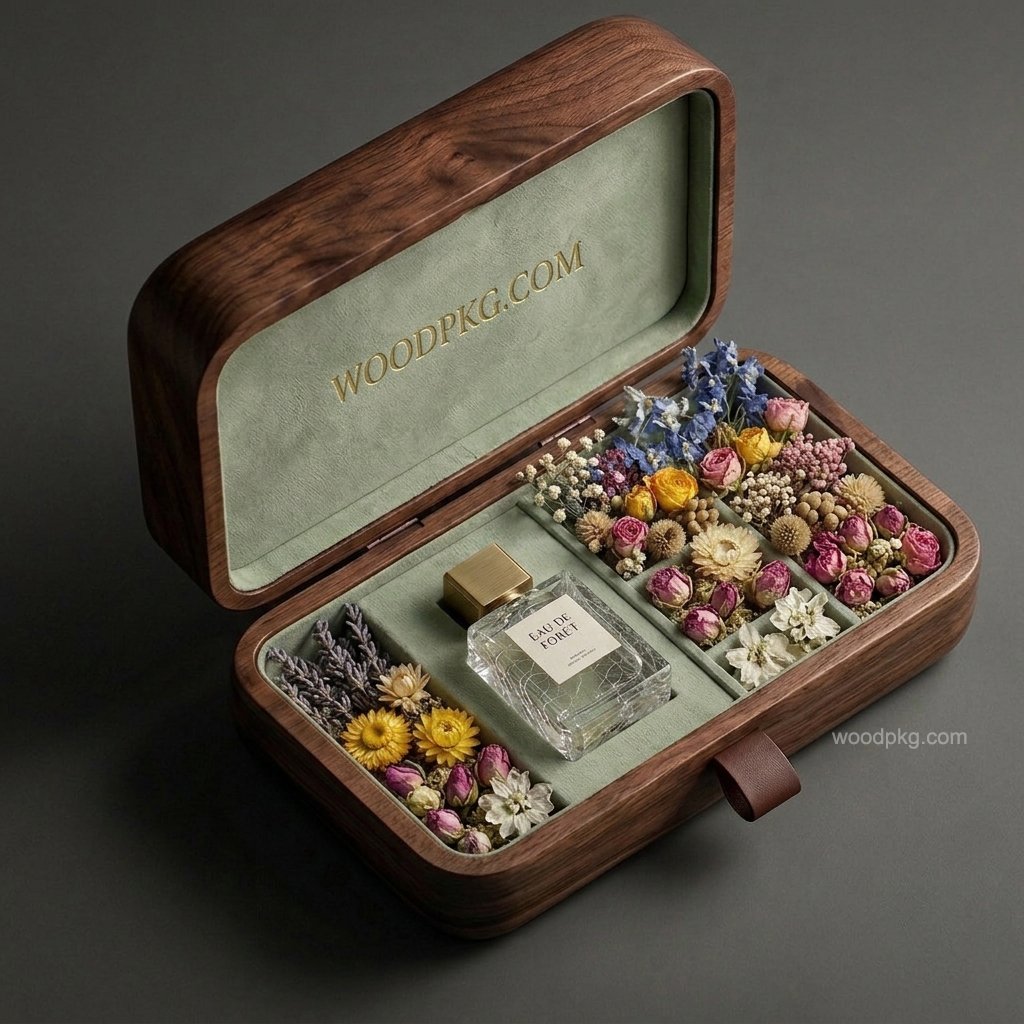
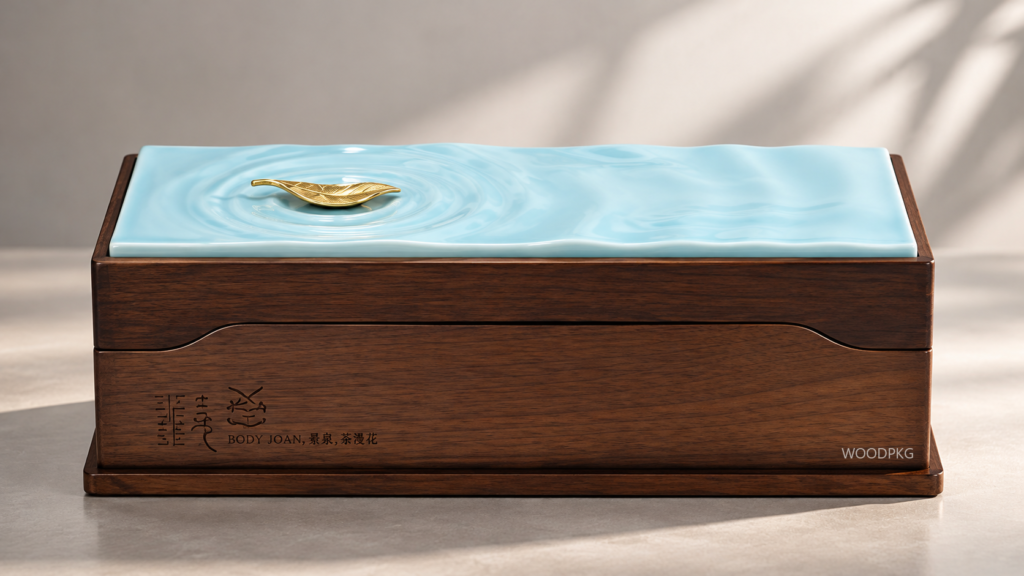
Over the past two years, Tongtai has received more inquiries and sample requests for fragrance packaging, mainly from new customers. Existing customers have also brought fragrance related needs. This is an observation about our own conversations and sampling work; it does not establish growth in confirmed orders or in the global fragrance market. Buyers have asked about bottle fit, the opening experience, finish consistency and the visual relationship between the box and the fragrance brand.
Before choosing a structure, we ask for the bottle dimensions and weight, neck and cap profile, expected quantity, desired exterior and insert materials, and the target market. A prototype can then test fit, opening force, surface appearance and packing protection. A visually striking concept still needs a repeatable production route.
2. Video Screen Wooden Boxes: Design the Whole Lid
Integration, audio and access
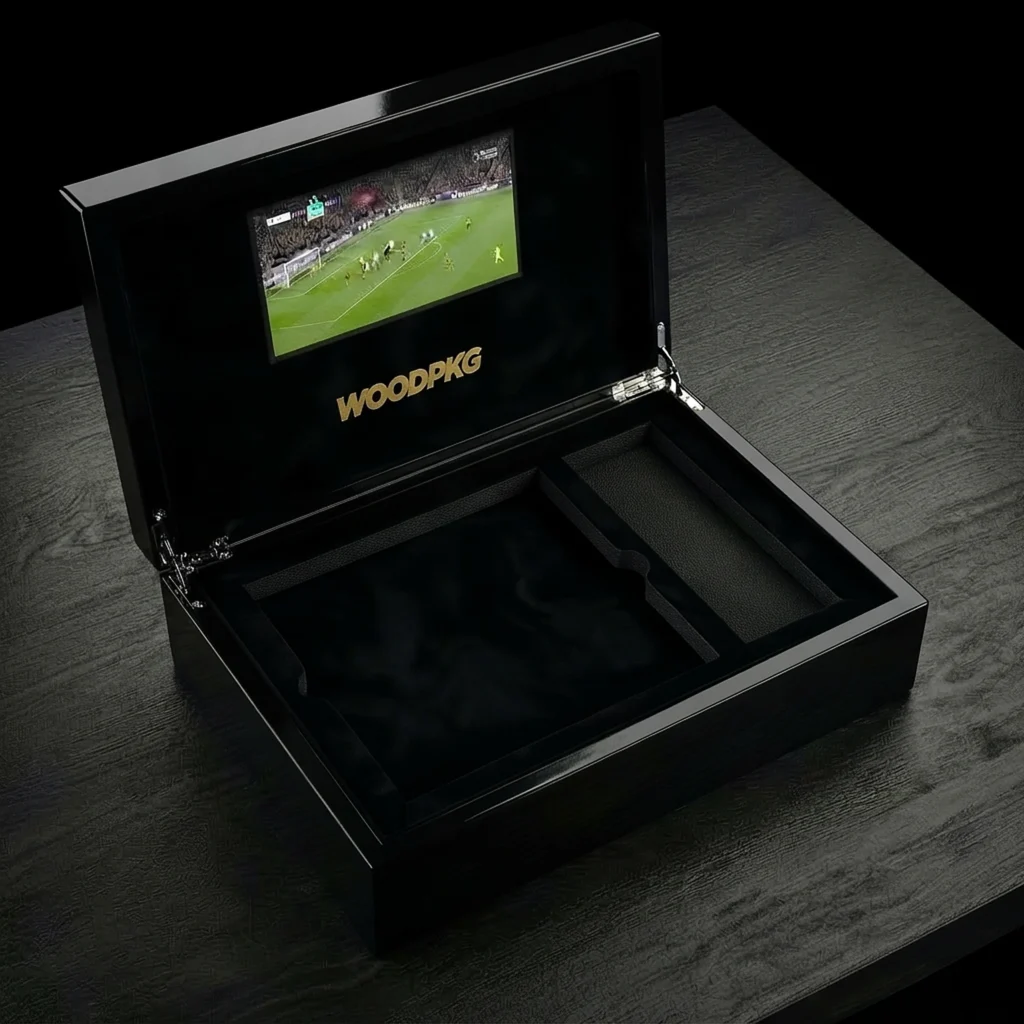
Tongtai has practical manufacturing experience integrating video screens into custom wooden presentation boxes. The engineering question is how the screen, lid and supporting parts work together. Available lid space affects the screen position and wood structure; speaker placement affects the sound path; data and charging ports must remain accessible in the agreed configuration. These decisions should be checked on a prototype rather than assumed from a rendering.
A detachable structure where the project calls for it
One structure explored in our work uses magnets and ball detents to locate and release a screen module. The design has to consider alignment, retention and removal feel. It is a project specific structural approach, not a standard feature of every video box. Buyers should state whether detachment is required and how often the module is expected to be removed.
3. Surface Craft: Paper Wrap, Metal Details and High Gloss
Appearance depends on adhesion and edge work
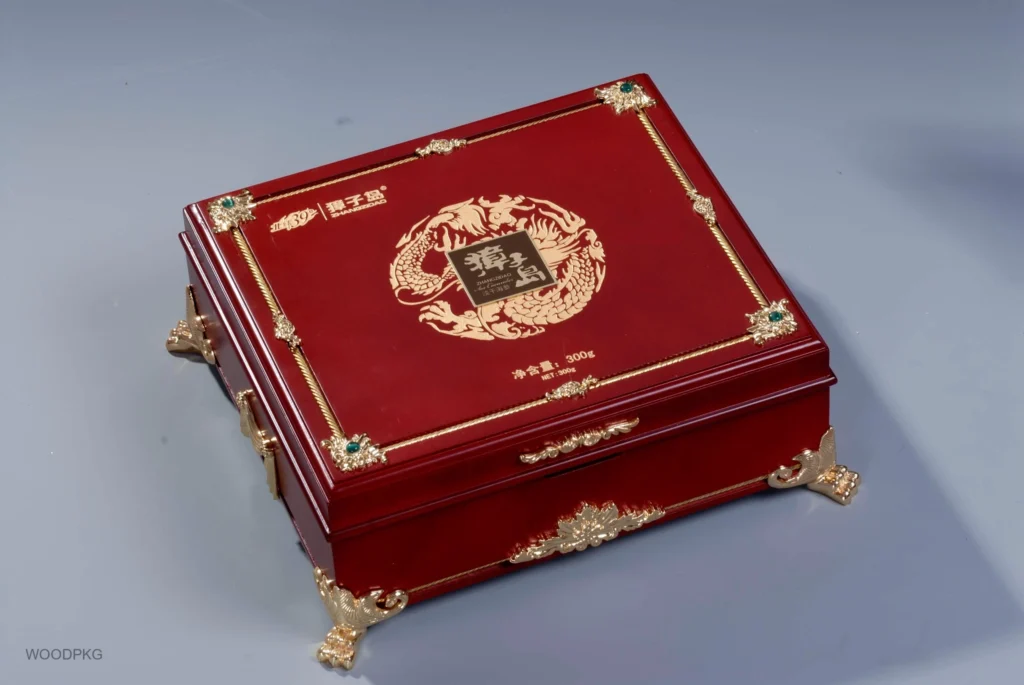
Tongtai has manufactured MDF boxes combining printed decorative paper wrapping, metal accents and multiple high-gloss coating steps. The visible finish depends on more than the final coat: the MDF substrate, paper, adhesive system and coating must work together. Adhesion, seam alignment and the appearance of exposed edges need attention during sampling and production.
At some paper wrapped joins, pale lines can remain visible. Manual black edge touch up is one practical finishing step used to refine that detail. It cannot compensate for poor substrate preparation or weak adhesion. Gloss and matte finishes should be chosen for the brand and the product, then tested on the actual material combination; neither is a universal trend.
4. MDF, Solid Wood and Mixed Materials
Choose for structure and finish, not by label alone
MDF offers a comparatively uniform surface that can suit wrapping and coating. Solid wood brings natural grain and tactile variation; species, moisture condition, construction and environment influence its behavior. Neither material is automatically the more suitable or more sustainable choice for every brief. Selection should consider the box dimensions, intended finish, quantity, budget and target market.
A box may also combine wood or MDF with metal trim, paper, fabric, leather like coverings or a fitted insert. Each added material creates a junction to design and a supplier document to check. A useful sample review looks at the complete assembly: opening, fit, color, seams, abrasion and transport protection.
5. Development Stage Interactions: State the Status Clearly
Some customer conversations go beyond conventional packaging. Camera based coffee inventory recognition and virtual jewelry try on are in development;they should not be described as completed or commercially released products. For the jewelry concept, the customer supplies the try on software. An offline experience based on preset interactions is a planning idea. Its content, hardware behavior and user experience would need to be defined and tested before any performance claim.
These ideas illustrate a useful development discipline: separate a working box structure, an electronic prototype, customer supplied software and a proposed interaction. The quotation and project schedule should say which elements are already validated and which still require development.
6. Material Reports and Market Requirements
Read the scope before making a claim
Buyers may ask for documents covering MDF, coatings, fabric or other materials. A test report applies to the sample, test items, method and date it names. An MDF E1 related report should be checked against the exact panel, referenced standard and formaldehyde test method. A coating SVHC screening report covers the submitted coating sample and the screened substances listed in that report; it is not proof that a finished box meets every requirement of REACH or of another market.
Requirements differ by destination and by the final product configuration, particularly when electronics or batteries are included. Buyers and suppliers should agree on the target market, materials, intended use and documents required for the actual shipment. Any specific legal effective date or claim of product certification should be verified against current official rules and the underlying reports before publication.
7. A Practical Buyer Checklist
To make an initial assessment productive, share: (1) product type and dimensions, including bottle or device drawings; (2) expected order quantity and target delivery window; (3) intended market and required material or electronic documents; (4) preferred substrate, finish, decorations and insert; (5) whether a screen, speaker, port or detachable module is needed; (6) artwork and branding rules; (7) packing and transport requirements; and (8) a target budget or cost range. Indicate what is fixed and what can change after sampling.
8. Conclusion: Design for the Product and the Evidence
For 2027 planning, the most useful question is not which single feature is fashionable. It is how structure, surface craft, material choice and documentation serve a specific product. Our fragrance inquiries, screen box engineering work and finishing experience point to a practical process: define the brief, prototype the difficult details and verify every claim against the relevant project and report.
Discuss your project with WOODPKG
Planning a fragrance presentation box, a wooden box with a screen, or a particular wood and finish combination? Send us your product dimensions, estimated quantity, target market and desired appearance. Our manufacturing team at Tongtai can review your requirements and help identify the structural, sampling and documentation details that need to be resolved before production.